PRP Treatment
Platelet-Rich Plasma (PRP) for Knee Arthritis
What you need to know, why we use high-dose PRP at RELIEVE CLINIC, and why it is different from most PRP injections.
What is Platelet-Rich Plasma?
Your blood contains platelets. You probably know them as the things that help your blood clot when you get a cut, but platelets do much more than that. They also release natural healing proteins called growth factors that help repair damaged tissue and calm down inflammation.
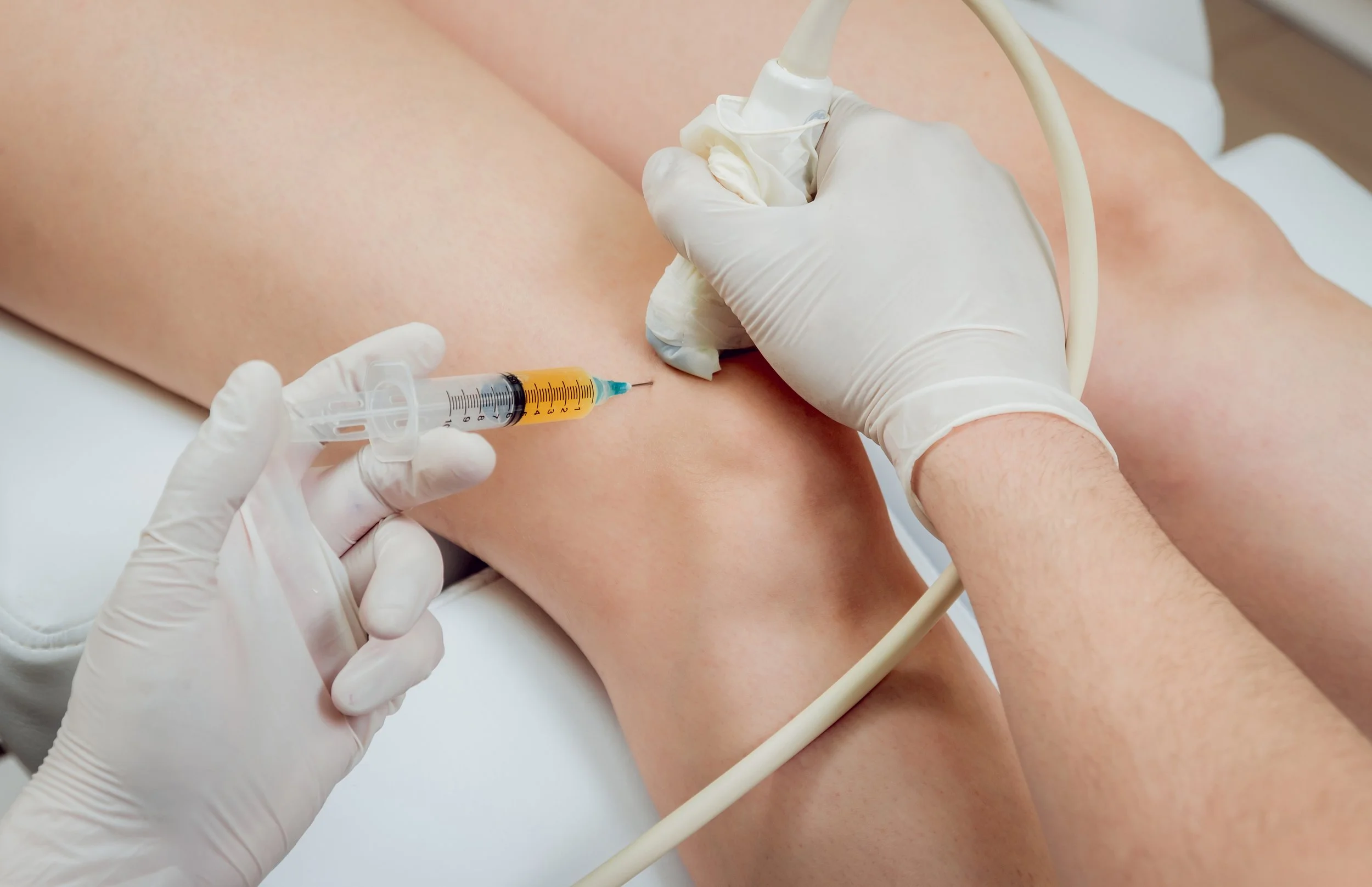
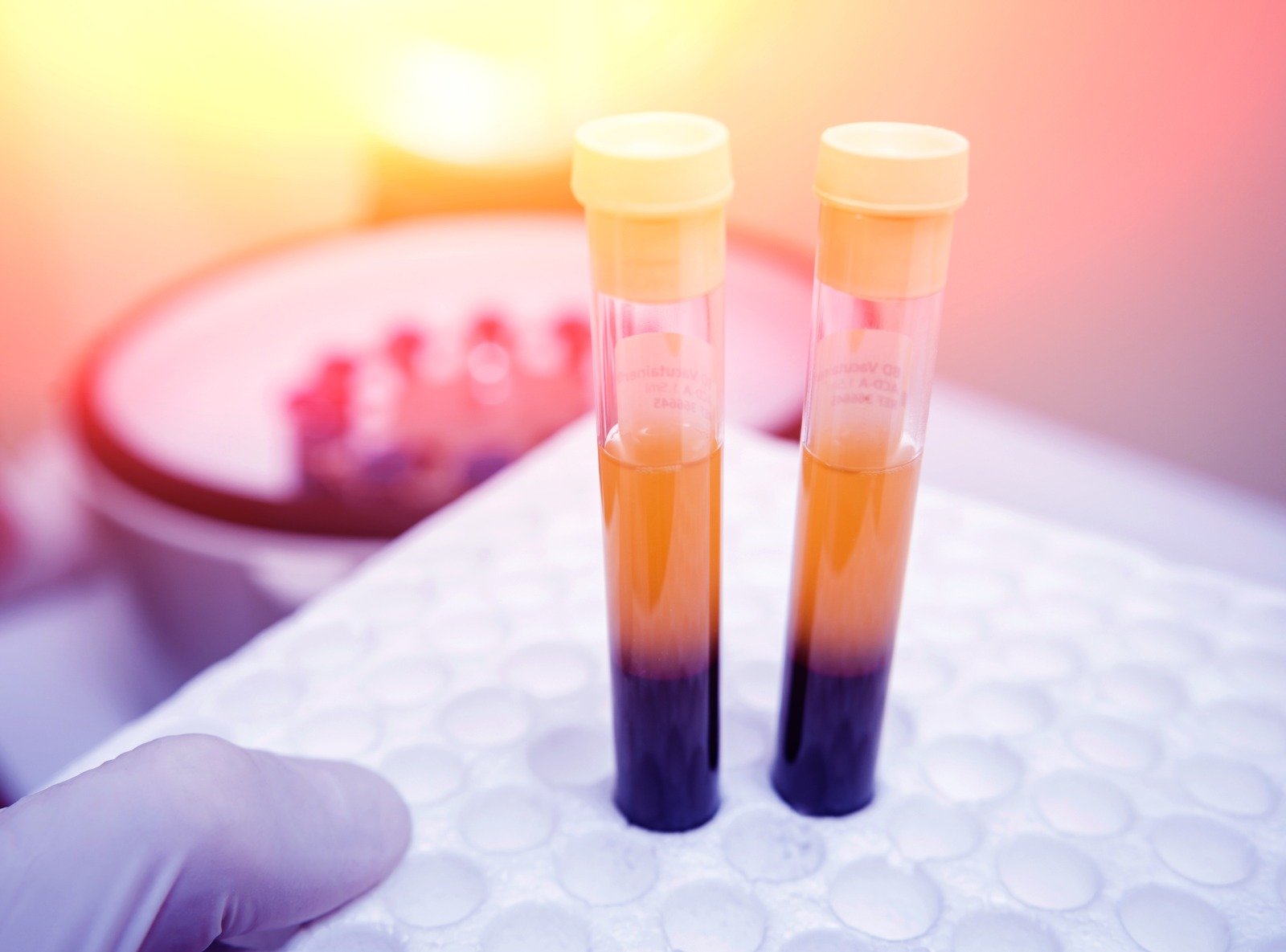
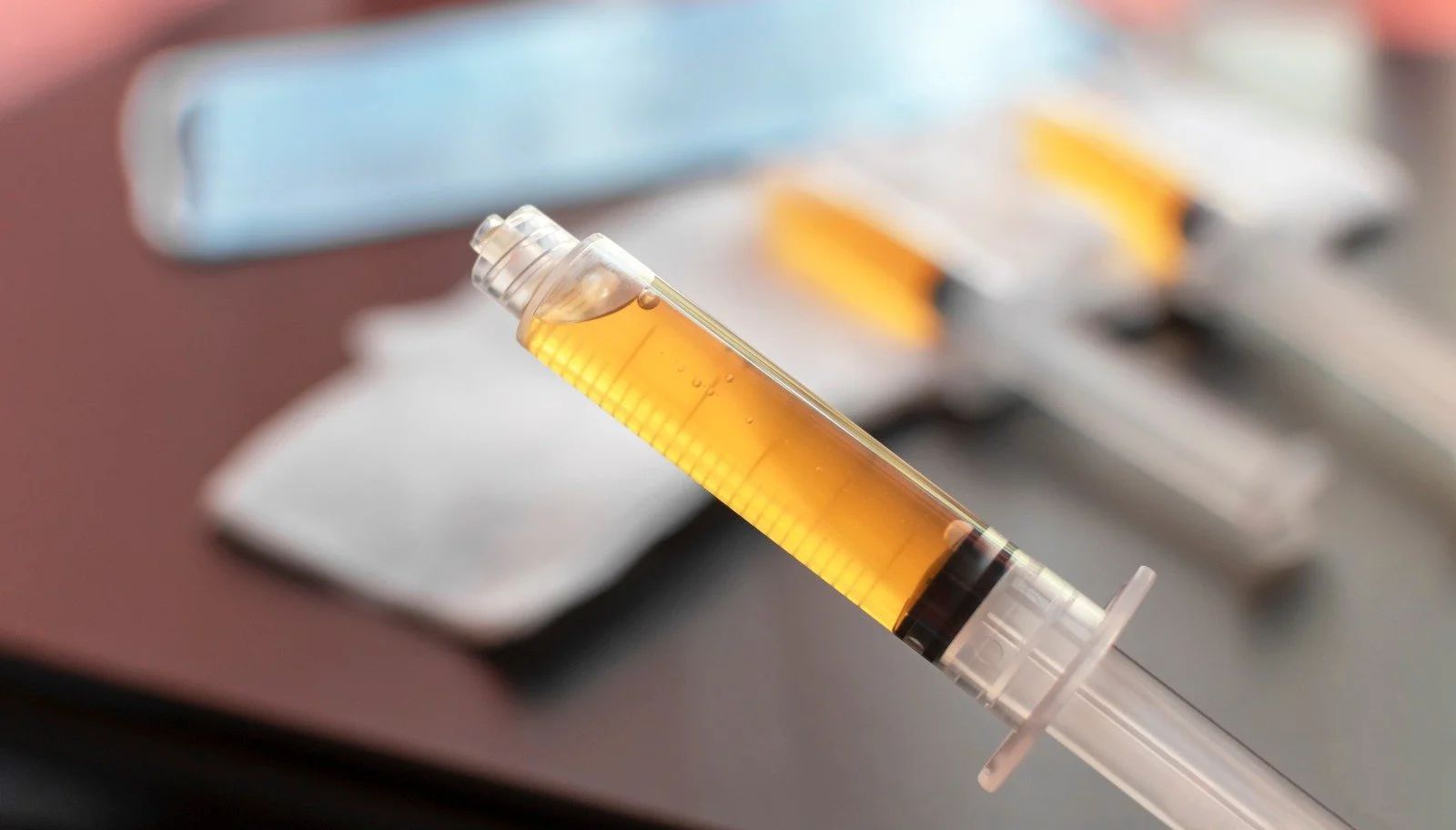
Platelet-rich plasma (PRP) is made by taking your own blood, spinning it in a machine (called a centrifuge) to separate out the platelets as well as monocytes, lymphocytes, … and concentrating them into a syringe. A doctor then injects this highly concentrated mixture directly into your knee joint.
What Does the Medical Literature Say?
A large group of European knee specialists (the ESSKA-ORBIT consensus — the biggest Europe-wide expert agreement on blood-based joint treatments) reviewed the evidence and concluded that PRP is a first-choice injection treatment for mild-to-moderate knee osteoarthritis. They noted that PRP performed better than both hyaluronic and corticosteroid injections over several months of follow-up (1).
The goal? To deliver a powerful dose of your body's own healing signals (the growth factors) right where your knee needs them most.
PRP has shown real promise as a treatment for knee arthritis, but study results have been mixed, some trials say it works, others say it doesn't. However, researchers are now zeroing in on a key reason for those conflicting results: how many platelets are actually in the injection matters.
However, even these experts admitted that they couldn't yet pin down exactly how concentrated the platelets need to be, because not enough studies had directly compared different concentrations (1).
That's starting to change and the newer research is painting a much clearer picture.
Why Concentration is Key: The "Dose" Problem
Think of it like making orange juice from concentrate. If you add too much water, the juice is weak and tasteless. The same idea applies to PRP: if the platelet concentration is too low, the injection may not deliver enough healing signals to make a real difference in your knee.
Studies Where PRP Didn't Work Well and Why
The RESTORE trial (2) was a well-designed study of 288 patients. It found that PRP was no better than a saltwater (saline) placebo injection for pain or cartilage preservation after 12 months. But here's the catch: the PRP they used was prepared with a simple, single spin that only concentrated the platelets to about 1.6 to 5 times the normal level in your blood. That's a relatively weak preparation.
What About a Higher Dose? A Study Where PRP Worked Very Well
Chu and colleagues (4) ran a large study across multiple hospitals with 610 patients. They used PRP concentrated to about 4.3 times the normal platelet level. The results were dramatically different: PRP was significantly better than placebo across all major pain and function scores, and this benefit lasted up to 5 years. On top of that, patients who received PRP lost less cartilage over time and had lower levels of inflammatory chemicals in their joint fluid (4).
The takeaway from comparing these studies is straightforward: the amount of platelets in the injection makes or breaks the treatment.
Lewis and colleagues (3) used a specific preparation system that also produces only a modest increase in platelet levels. Again, whether patients got one injection or several, PRP was no better than saline (3).
Unfortunately a lot of PRP injections that are being given in Belgium are with this low dose PRP.
High-dose vs Low-dose PRP Results
The Direct Evidence:
More Platelets = Better Results
The strongest direct proof came from a study by Boffa and colleagues (5), who tracked 253 patients and deliberately sorted them into three groups based on how concentrated their PRP was:
Group
Low
Medium
High
Platelet Concentration
Less than 800,000 platelets per microlitre
800,000 to 1,200,000 platelets per microlitre
More than 1,200,000 platelets per microlitre
Failure Rate
15.0%
Intermediate
Only 3.3%
The high-platelet group saw the greatest improvements across every pain and function measure. And the relationship was consistent: the more platelets in the injection, the better the outcome at every follow-up visit (5).

What the Bigger Picture Reviews Found
Bensa and colleagues (6) combined data from multiple studies (a "meta-analysis") and confirmed that PRP does produce meaningful, real-world improvement — and that the size of that improvement is directly tied to platelet concentration (6).
Li and colleagues (7) looked specifically at the highest-quality studies (double-blinded randomised controlled trials where neither doctors nor patients knew who got PRP and who got the comparison treatment and concluded that PRP outperforms hyaluronic acid gel injections (7).
Bansal and colleagues (8) took a different approach in their study of 150 patients: instead of just concentrating platelets to a certain level, they standardised the total dose to 10 billion platelets in 8 mL of fluid. Their high-dose PRP was better than hyaluronic acid across pain scores, function scores, and a walking endurance test (the six-minute walking distance) through 12 months. Patients also had lower inflammation markers in their joint fluid and showed better cartilage preservation on MRI scans (8).
✓ High-dose PRP treatments show improvement rates of 80-90% in patients with knee osteoarthritis (Boffa et al., 2024)
As researchers Boffa and Filardo (9) have pointed out, the biggest barrier to getting PRP officially recommended in treatment guidelines is that every clinic prepares PRP differently and too many use low dose PRP.
Here's the bottom line from all of this research:
Platelets are the active ingredient in PRP. They release growth factors and anti-inflammatory proteins that can help calm down the damaging processes inside an arthritic knee (5, 8).
Weak PRP preparations may simply not contain enough healing power to overcome the ongoing damage in your joint. That explains why some well-run studies like the RESTORE trial (2) found no benefit: the "dose" was too low.
Stronger preparations — those with more than about 1,200,000 platelets per microlitre, or a standardised dose of around 10 billion platelets — appear to cross a critical threshold. At these levels, patients consistently experience meaningful pain relief, reduced inflammation, and potentially slower cartilage loss.
Putting it All Together: What Does This Mean for You?
Summary
PRP uses your own blood's healing power to treat knee arthritis. The science increasingly shows it can work, but only if the platelet concentration is high enough. If you're considering PRP, it's worth asking your doctor about the concentration of the preparation they use (aks how much blood they will take, if the volume of blood drawn is low, the PRP will be low-dose). We recommend only high-dose PRP injections especially for knee injuries.
References
1) Laver L, Filardo G, Sanchez M, et al. The use of injectable orthobiologics for knee osteoarthritis: a European ESSKA-ORBIT consensus. Part 1: blood-derived products (platelet-rich plasma). Knee Surg Sports Traumatol Arthrosc. 2024;32(4):783-797.
2) Bennell KL, Paterson KL, Metcalf BR, et al. Effect of intra-articular platelet-rich plasma vs placebo injection on pain and medial tibial cartilage volume in patients with knee osteoarthritis: the RESTORE Randomized Clinical Trial. JAMA. 2021;326(20):2021-2030.
3) Lewis E, Merghani K, Robertson I, et al. The effectiveness of leucocyte-poor PRP injections on symptomatic early OA of the knee. Bone Joint J. 2022;104-B(6):663-671.
4) Chu J, Duan W, Yu Z, et al. Intra-articular injections of platelet-rich plasma decrease pain and improve functional outcomes than sham saline in patients with knee osteoarthritis. Knee Surg Sports Traumatol Arthrosc. 2022;30(12):4063-4071.
5) Boffa A, De Marziani L, Andriolo L, et al. Influence of platelet concentration on the clinical outcome of platelet-rich plasma injections in knee osteoarthritis. Am J Sports Med. 2024;52(13):3223-3231.
6) Bensa A, Previtali D, Sangiorgio A, Boffa A, Salerno M, Filardo G. PRP injections for the treatment of knee osteoarthritis: the improvement is clinically significant and influenced by platelet concentration. Am J Sports Med. 2026;54(1):NP6-NP7.
7) Li YF, Xing HH, Wei CK, et al. Platelet-rich plasma is more effective than hyaluronic acid injections for osteoarthritis of the knee: a meta-analysis based on randomized, double-blinded, controlled clinical trials. Arthroscopy. 2025;41(12):5304-5318.
8) Bansal H, Leon J, Pont JL, et al. Platelet-rich plasma (PRP) in osteoarthritis (OA) knee: correct dose critical for long term clinical efficacy. Sci Rep. 2021;11:3971.
9) Boffa A, Filardo G. Orthobiologics: injectable treatments for knee osteoarthritis. Clin Sports Med. 2025;44(3):401-413.